Knowledge base
Ancient Lore & Archaeology
The deep human past, read where it actually survives, in cenotes, under laser survey, and in heritage the climate is taking back.
The deep human past is not read in a library. It is read in the ground, in the water, and increasingly from the air, in cenotes that doubled as doorways to the Maya underworld, in Amazonian earthworks that laser survey is pulling out of the canopy, in textiles that were well preserved under Arctic ice until the ice stopped keeping them. This is AEDO1’s archaeology desk.
It is also an argument about language. Cities are called “lost” that were never lost to the people living on them; sites are “discovered” that locals had always known. We try to get both the science and the framing right, the methods (lidar, rescue archaeology, careful dating) and the ethics of who gets to be the one doing the finding.
In the Report · 7
The Textiles Were Well Preserved in the 1980s. By the 2010s They Were Almost Gone.
Archaeology's default doctrine is to leave things in the ground, because the ground preserves them. At a 17th-century whalers' graveyard on Svalbard, researchers measured what happens when the ground stops keeping its side of the bargain.
Read →Pompeii Is Being Excavated Again, and Deliberately Leaving a Third Buried
The biggest dig in a generation is underway in Regio IX, unearthing near-life-size gods on painted walls. The most radical thing about it is what the archaeologists are choosing not to dig at all.
Read →A Maya City Was Hiding in Lidar Flown to Count Trees. Nobody Had Looked.
A graduate student ran an internet search, found a 2013 environmental laser survey, and pulled a city of perhaps 50,000 people out of it. The lesson is not that the Maya are hidden, it is that we keep deciding the jungle is empty.
Read →AI Found 303 Nazca Figures in Six Months. The Last Century Found 430.
A model trained on the Nazca lines pointed researchers at where to walk, and the discovery rate jumped roughly sixteenfold. But the machine did not find anything, it made a shortlist, and people confirmed it on foot.
Read →The Easter Island "Collapse" That Ancient DNA Says Never Happened
It is the most retold parable in popular archaeology, a people so reckless they cut down their last tree and doomed themselves. In September 2024, the genomes of fifteen ancient Rapanui returned a verdict on the story. There was no collapse.
Read →The Amazon's 'Lost Cities' Were Never Lost. People Were Living On Them.
Lidar has revealed genuine ancient urbanism beneath the rainforest canopy, 6,000 platforms, 15 centres, 2,500 years old. The discovery is real. The word 'discovery' is doing something else, and archaeologists have started saying so in print.
Read →A Meteor, an Ice-Age Girl, and the Nine Lords of the Underworld: One Cenote, Read Three Ways
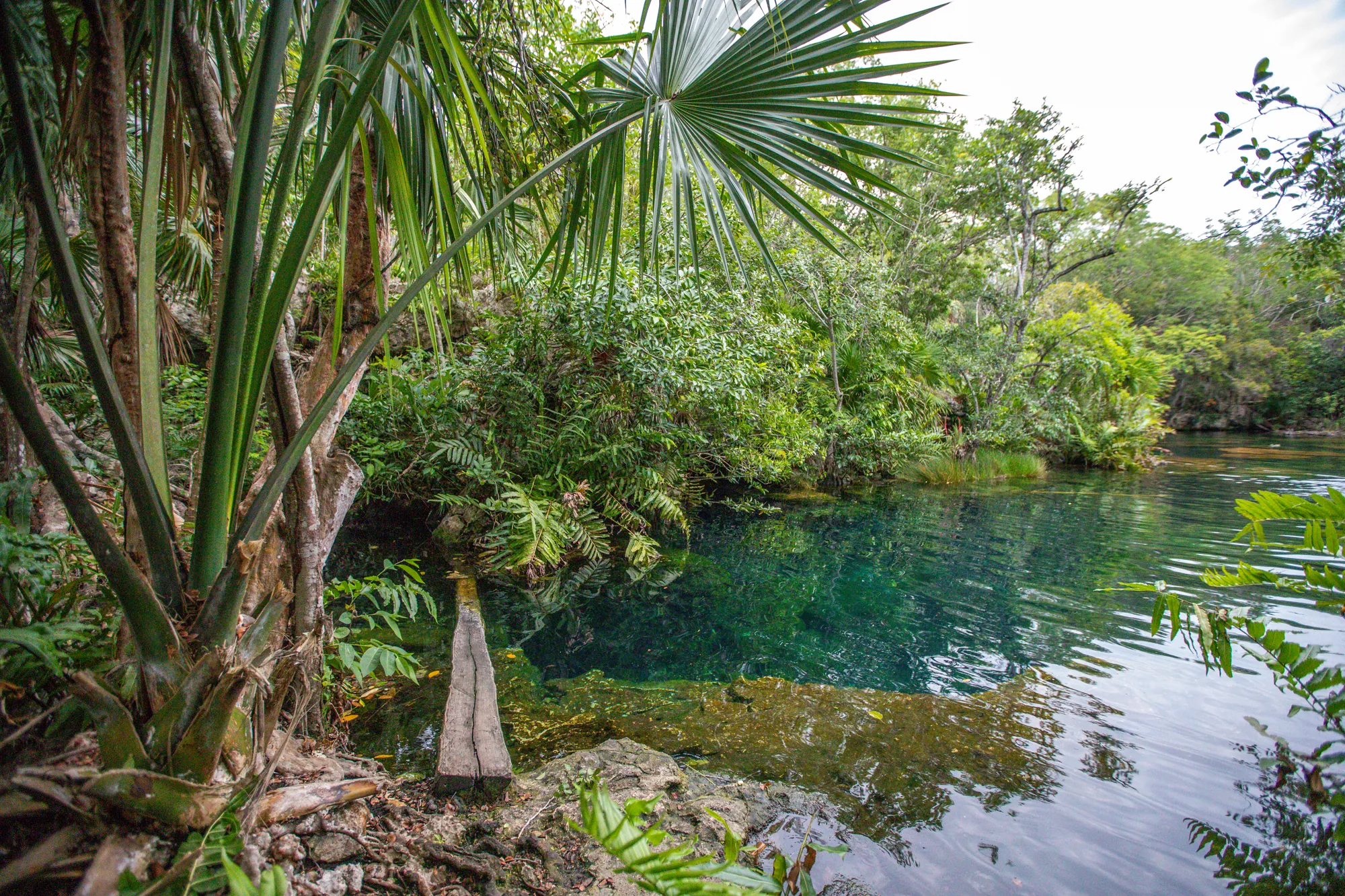
At Cenote Jardín del Edén near Puerto Aventuras, the diver known as Captain Quickie walks through the deep-time, Maya, and modern lives of a single sinkhole. We ran everything he said past the science, most of it holds, and the parts that don't are worth the correction.
Read →Go deeper
- UNESCO World Heritage Centre ↗
The international register of cultural and natural heritage sites.
- Archaeological Institute of America ↗
Key terms
- Lidar
- Laser scanning from aircraft or drones that removes vegetation in the data to reveal earthworks and structures beneath the canopy.
- Rescue archaeology
- Excavation done ahead of construction, erosion, or looting, to record a site before it is destroyed.
- Provenance
- The documented origin and chain of custody of an artifact, without it, an object’s meaning and legality are in question.