Of Service to Those Who Serve
At Yellowstone's northern gate, an 1890s house in Gardiner, Montana throws its doors open, free, to the veterans, firefighters, and police officers who have spent their lives holding the door for everyone else.
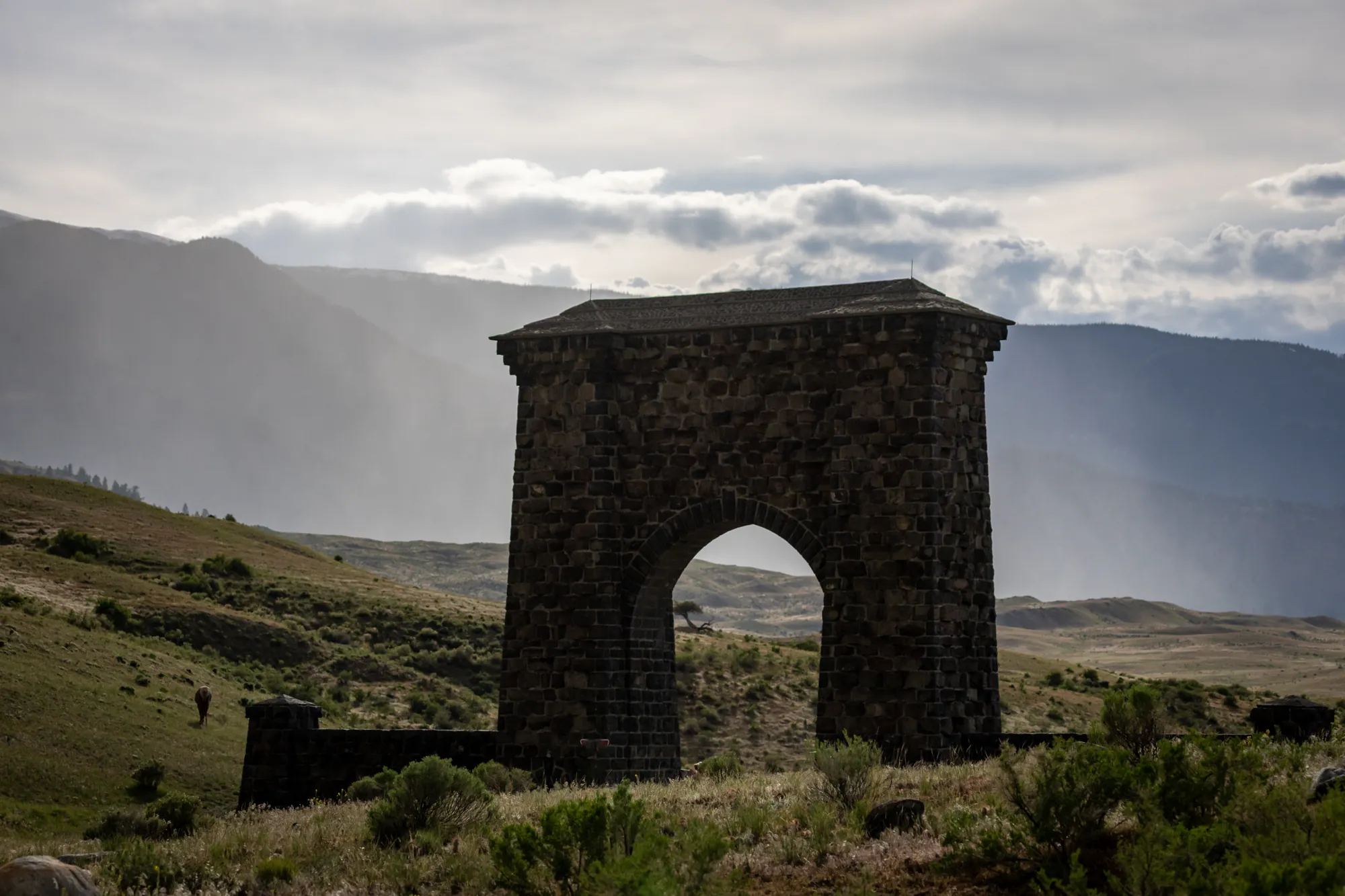
The gate
Every summer, millions of people drive under a rough basalt arch at the edge of Gardiner, Montana, and almost all of them are looking the other way, north, into Yellowstone, toward the geysers and the wolves and the herds. If they turned around, they would read the words cut across the top of the Roosevelt Arch, lifted from the 1872 act of Congress that made Yellowstone the world's first national park: "For the Benefit and Enjoyment of the People." Theodore Roosevelt laid the cornerstone in 1903. The arch has stood at the North Entrance ever since, a fifty-foot promise in stone that the wild belongs to everyone.
A few hundred feet down Main Street, someone is trying to make that promise specific, and to hand it, first, to the people who earned it the hard way.
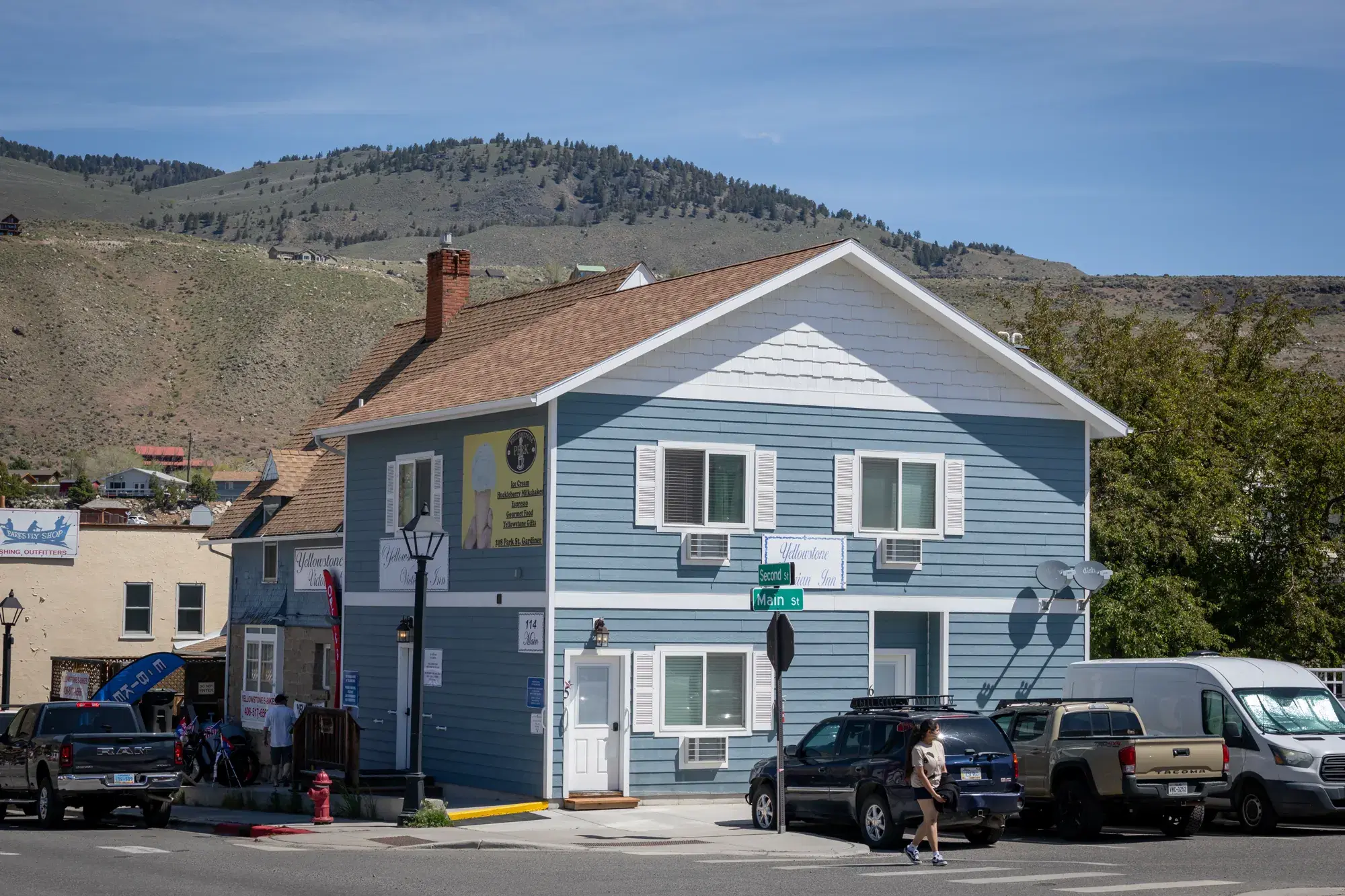
A house that opens onto Yellowstone
The Yellowstone Heroes House occupies an 1890s building, one of the oldest still standing in Gardiner, a town that has lost most of its early houses to a century of fires. Six rooms, each with a queen bed, a refrigerator, a microwave. Nothing extravagant. What it has instead is an address money usually can't buy at any price: from the front door, you are looking straight into Yellowstone.
The offer inside is almost startling in a gateway town where a summer room can run three to five hundred dollars a night. If you are a veteran, an active-duty service member, a firefighter, or a police officer, you stay here for free.
The founder would rather not be the story. He keeps his own name off the wall and asks that the light fall on his guests instead. He will say only that he started the house partly in memory of his own father, a career soldier, and that the idea had been on his heart for years before he finally opened the doors this spring. The point was never him. The point is the door, and who gets to walk through it.
The first name on the wall
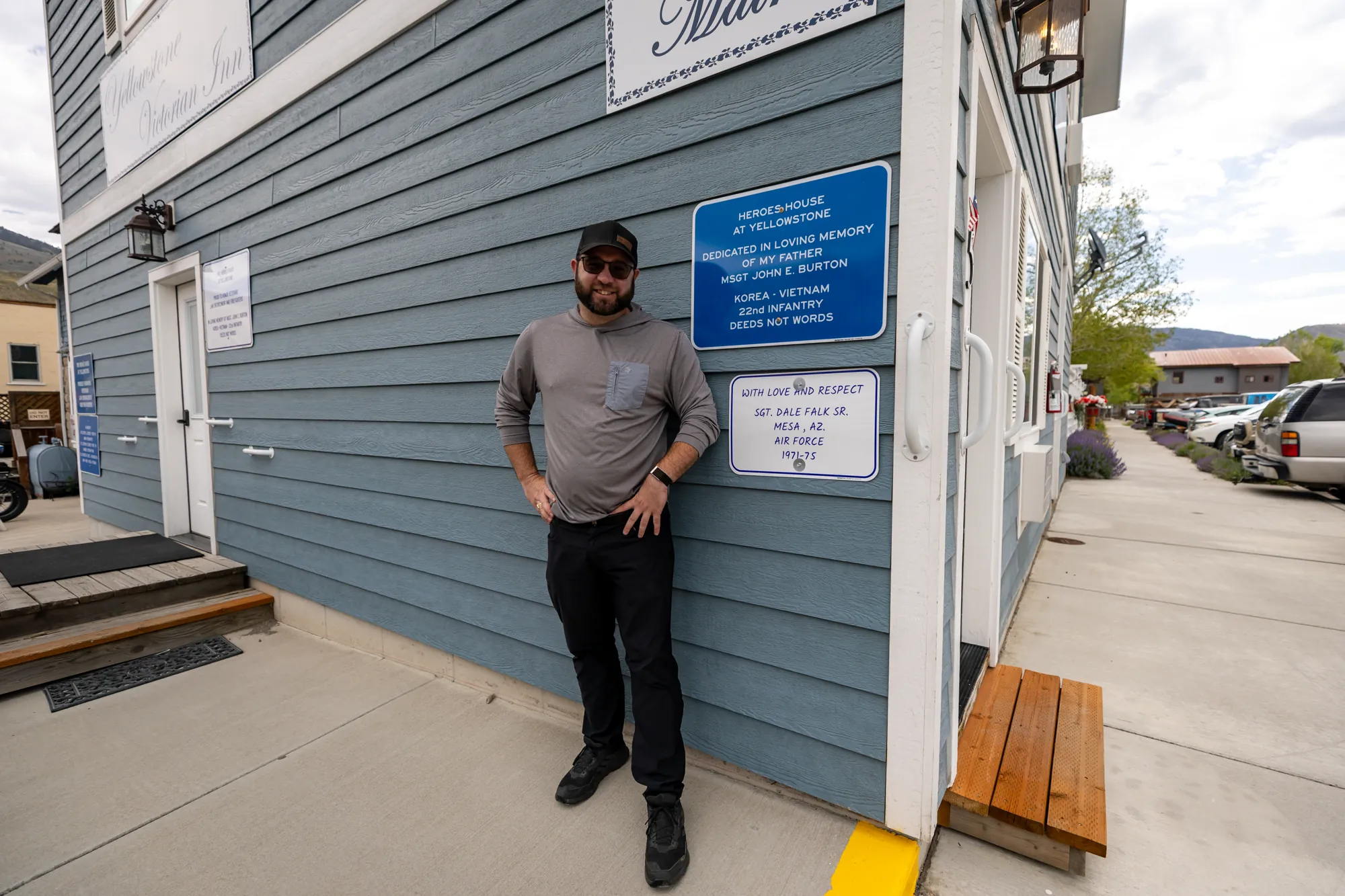
By that front door, small memorial plaques have begun to go up, each one a veteran, remembered by the people who loved them. The first went up on Memorial Day, 2026: the weekend the house opened.
It reads, in part: With love and respect, Sgt. Dale Falk Sr. Mesa, AZ. Air Force, 1971–75. An Air Force veteran, honored by his son, Dale Falk Jr., who set his father's name on the wall of a house built to give people like him a place to rest.
A son, honoring his father, at the threshold of Yellowstone. That is the whole idea of the place, carried out in a single gesture, and it is the one worth keeping your eye on, rather than any founder's story. The plaques will keep going up. Each is a name the country asked a great deal of, and a family that refused to let it go unmarked.
Treat you like family
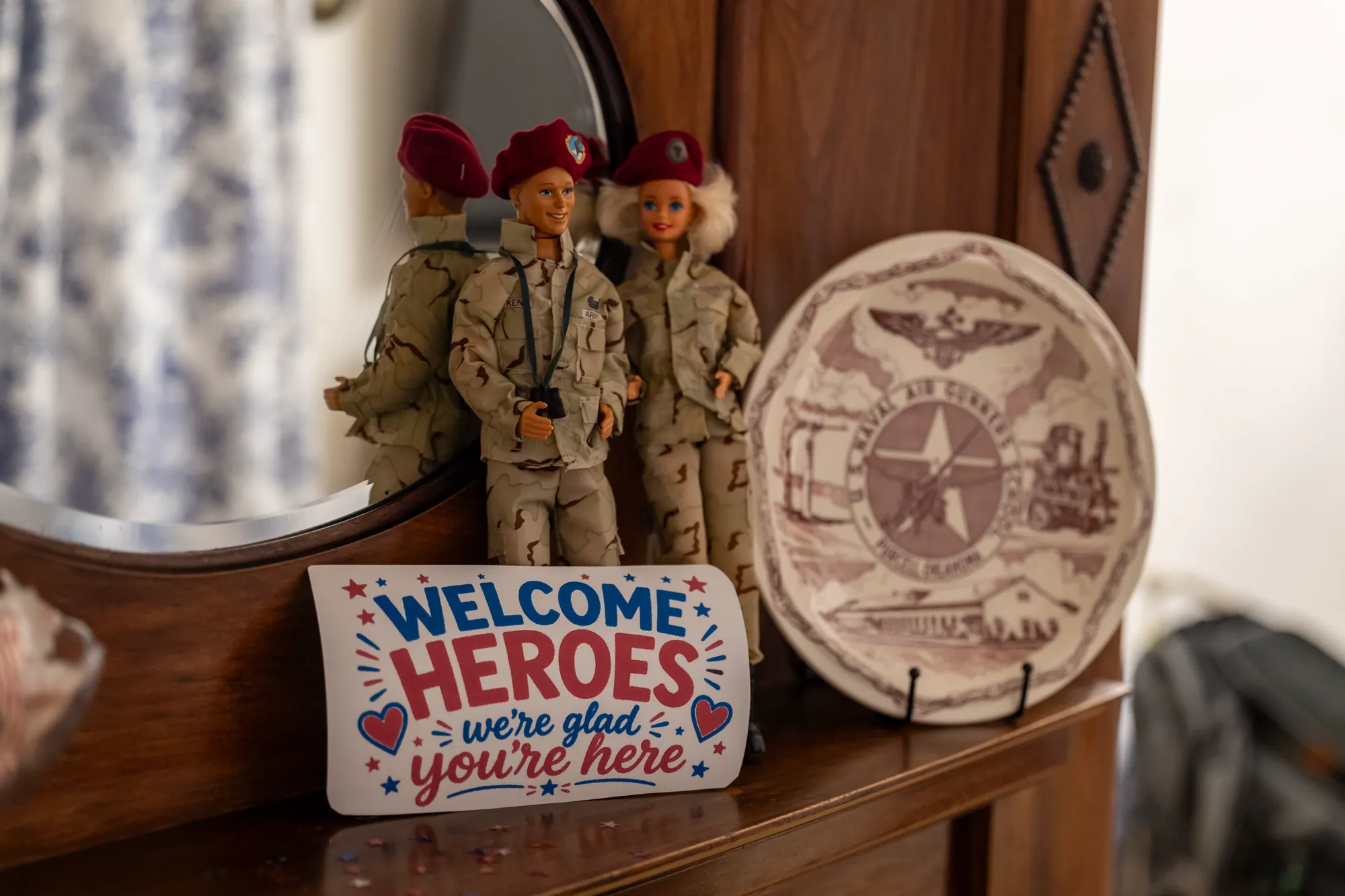
The house means the whole stay, not just the bed. It has partnered with a rafting company, the local hot springs, an e-bike outfit, and a handful of restaurants, so a guest can fill their days without opening a wallet.
"We're not only going to take care of you, we're going to treat you like family."
- The Heroes House founder
Suzanne Dockery, who runs the e-bike rides, describes a morning that ends with a lake and a pizza party:
"You explore Yellowstone via e-bike, we've got the Yellowstone Trail right behind us. We end at Cutler Lake, turn around, and come back for a pizza party. We have baby seats and toddler seats, and lighter bikes for the grandparents, so no one has to miss out on the fun."
Kids, grandparents, the whole family. Because the point was never a discounted room. The point is a handful of days when the people who absorb everyone else's worst moments get to set it all down.
"When they come here, they're going to come as a guest. But when they leave, they're going to leave as a friend."
- The Heroes House founder
Why a bed matters
There is a harder reason this house exists, and the people behind it do not soften it.
"These are the facts. We lose a US veteran basically every hour to suicide. How many people could we help by saying: go to Yellowstone, come here, relax, see the animals, experience something new? How many people could we help save?"
- The Heroes House founder
The audited number is its own gut-punch. In its 2024 National Veteran Suicide Prevention Annual Report, the U.S. Department of Veterans Affairs counted 6,407 veteran suicides in 2022, an average of 17.6 every day. The "every hour" is the grief-math of someone who has stood close to it; the VA's daily figure is the measured one. Either way the shape is the same: a steady, mostly invisible loss among precisely the people this house was built for, and among the firefighters and police officers beside them, who carry some of the highest rates of trauma and burnout of any work there is.
A free week in Yellowstone does not fix that, and no one here pretends it does. But reset, rewind, and rejuvenate is not nothing. For someone standing near the edge, a place that says you are wanted, needed, appreciated can weigh more than it looks.
If you or a veteran you love is in crisis, the Veterans Crisis Line is free and confidential, 24 hours a day, dial 988, then press 1.
The medicine outside the door
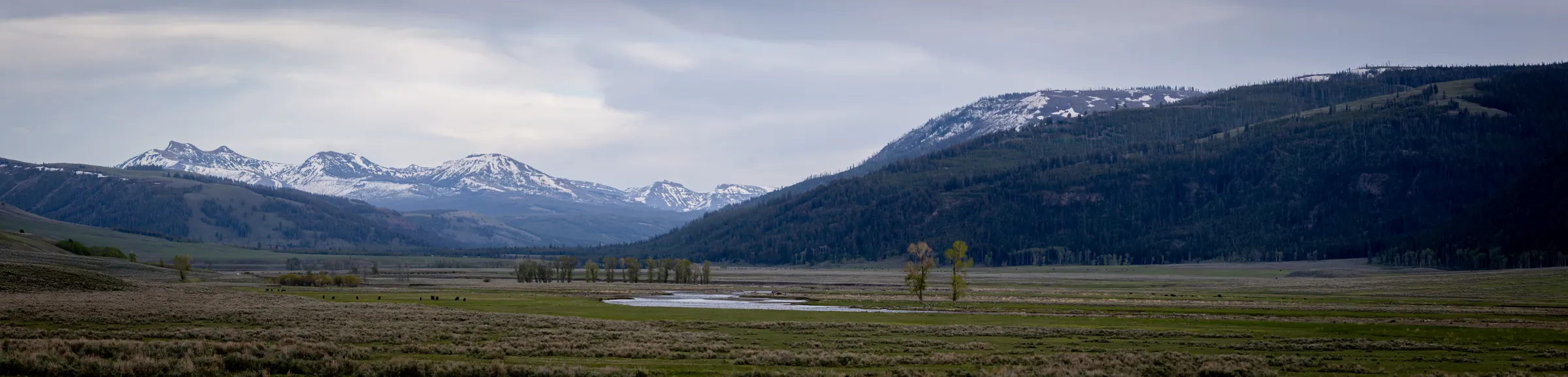
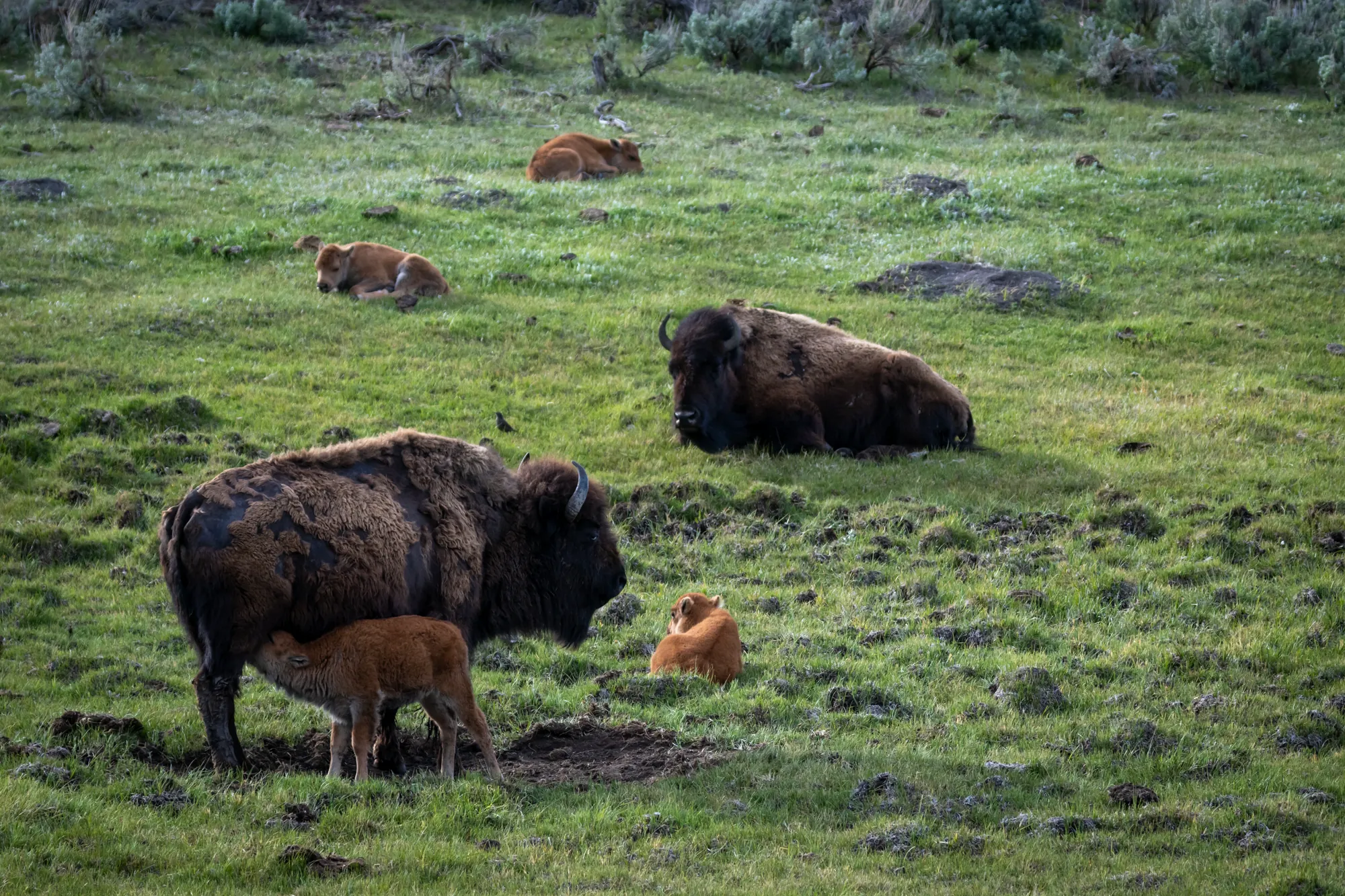
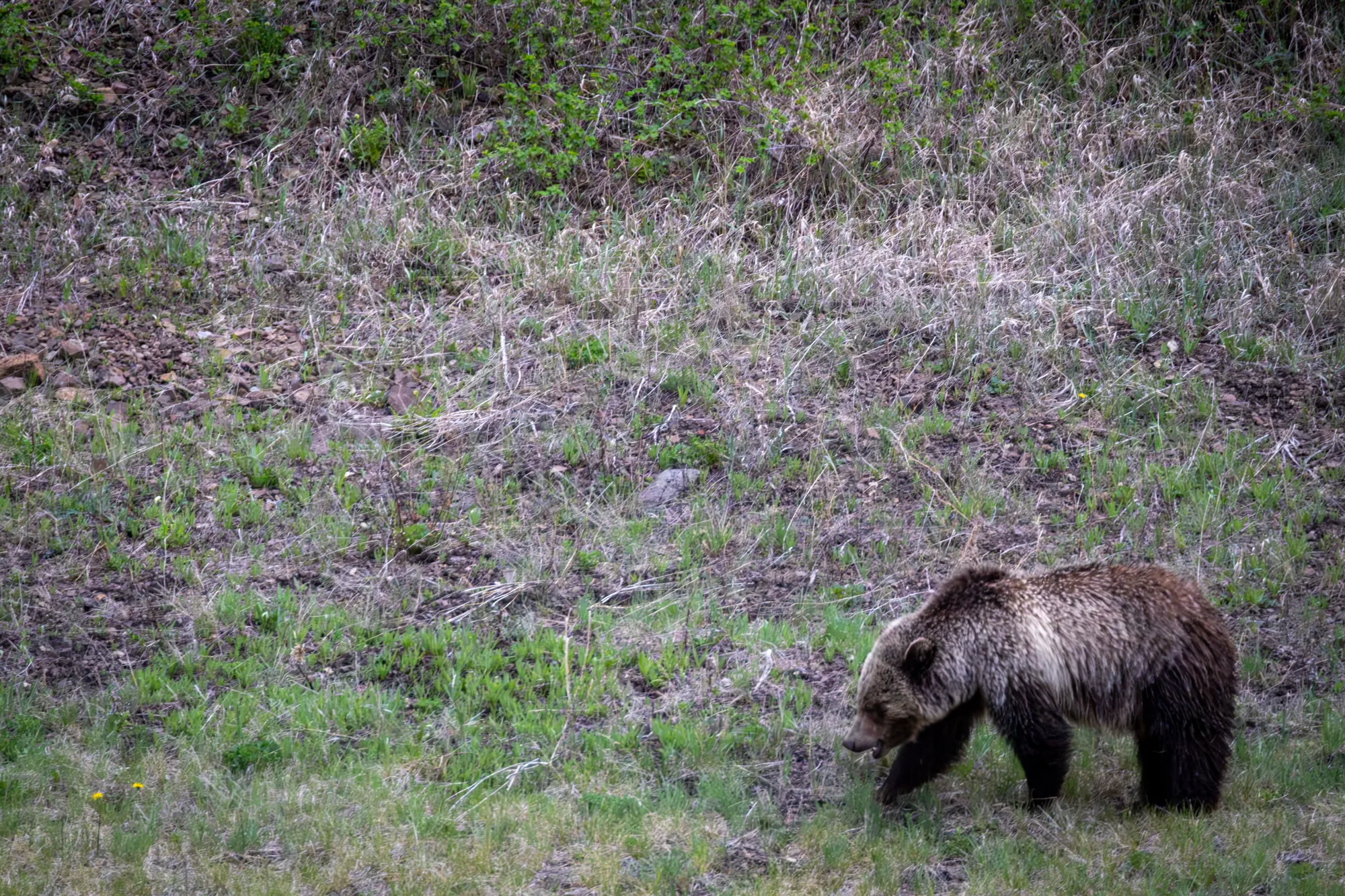
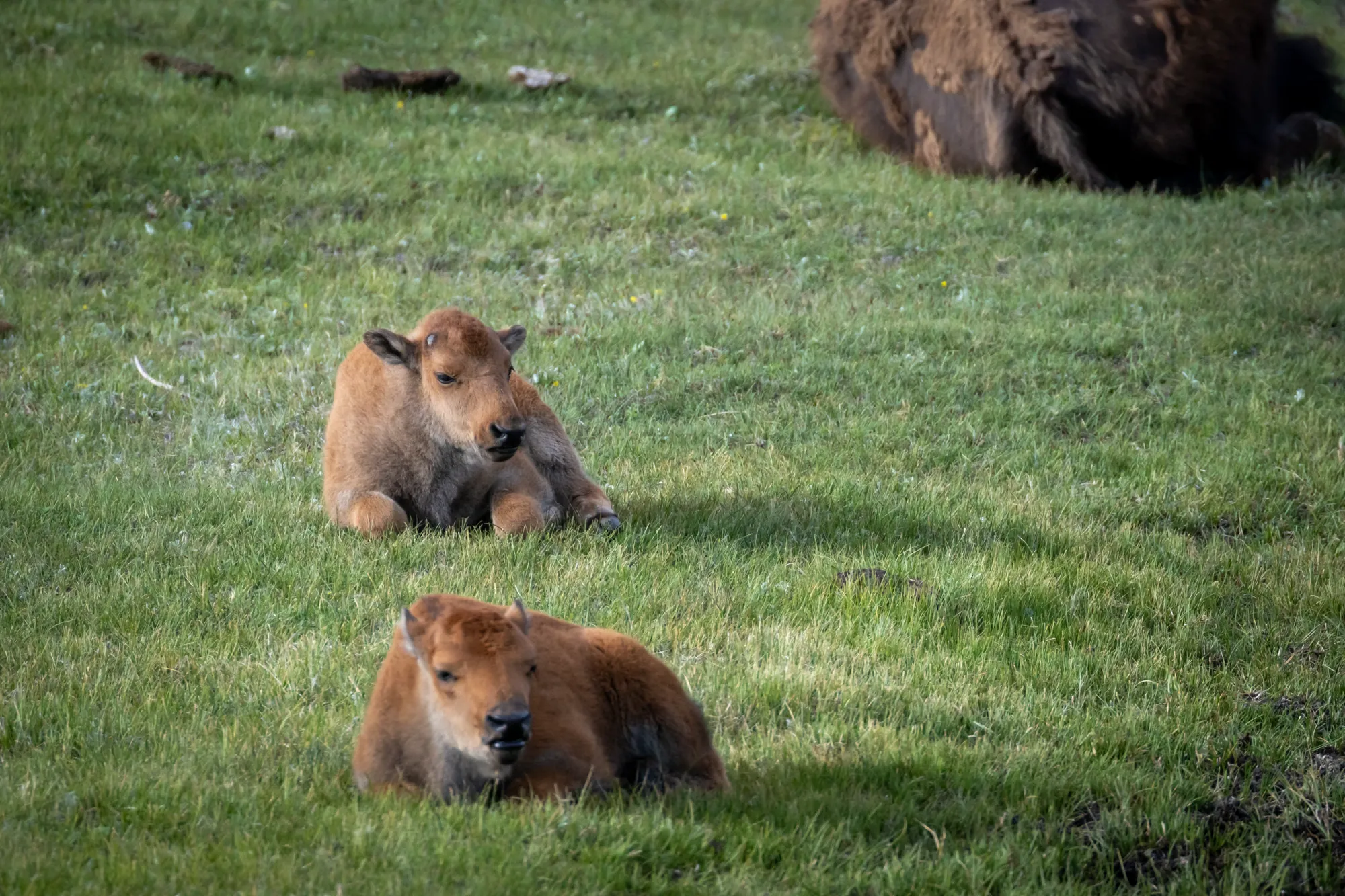
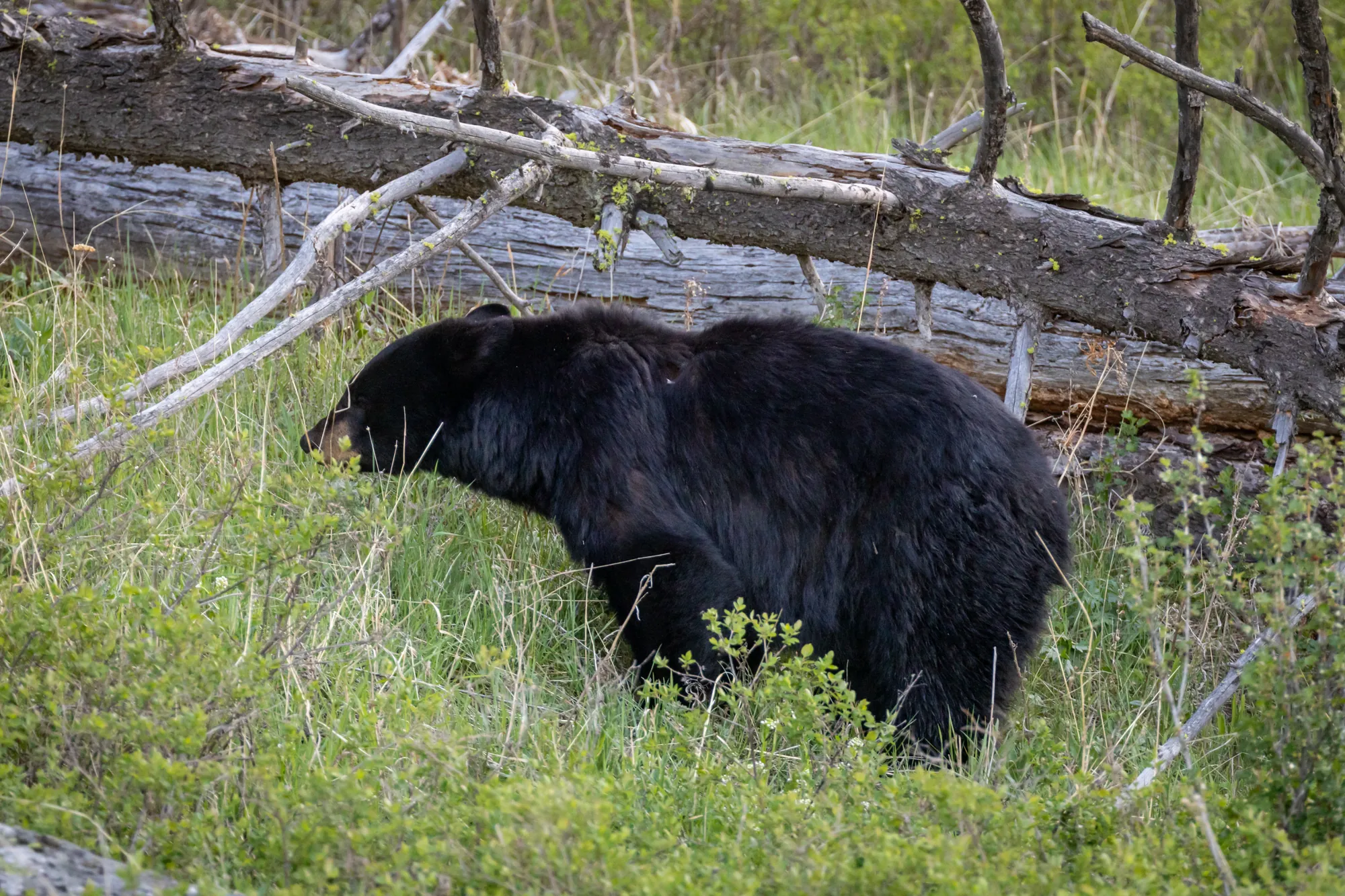
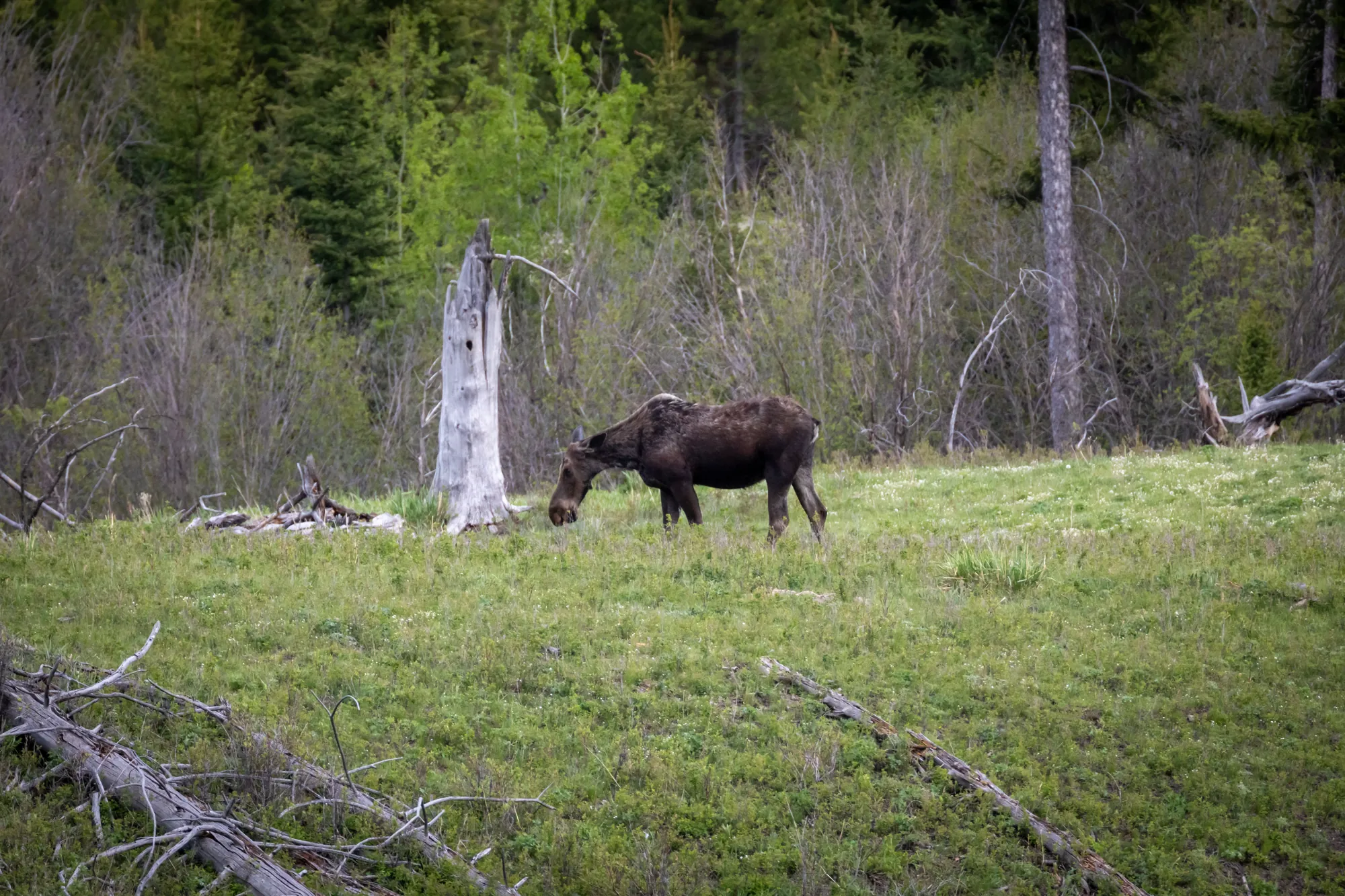
What waits past the arch is the argument for the whole idea. Gardiner sits at the mouth of Yellowstone's northern range, the belt of sagebrush valley and river bottom that stays open and full of animals while the high country is still buried in snow. In one spring morning here you can watch bison steer their orange calves across a meadow, find a grizzly nose-down in a slope of wildflowers, catch a black bear working through downed timber, and pick a bull moose out of the willows. An hour east, in the Lamar Valley that wolf-watchers call America's Serengeti, the packs hunt the flats at first light. It is, by any measure, worth fighting for.
Gardiner also knows how fragile the arrangement is. In June 2022, a 500-year flood peeled the road between Gardiner and Mammoth Hot Springs off the mountainside and cut the town off from the park that is its livelihood; the North Entrance did not fully reopen to visitors until that October. The town rebuilt. That a place which had just watched its own lifeline wash away would turn around and begin giving nights in Yellowstone away for free tells you something about the people who live here.
The first year
The people behind the Heroes House are candid that this is a beginning, not a finished thing.
"This is the first year. We've got a good setup and we're helping some people, but I think we can help a lot more. I'm looking for people who share the same vision and the same hope, toward helping the veterans and the police officers and the firefighters we depend on every day."
- The Heroes House founder
That is, in the end, the same words carved over the arch down the street, for the benefit and enjoyment of the people, narrowed to a doorway and a set of keys, and handed first to the ones who earned it the hard way. Not as a slogan. As a bed, a river, and a name on the wall that someone loved.
The Yellowstone Heroes House is at 114 Main Street in Gardiner, Montana. Reservations are limited; the surest way to reach them is to text 205-886-8282.
From Gardiner, over the weekend
Sources
Every factual claim above traces to one of these. Primary documents are marked. If we got something wrong, we want to know.
- [01]Yellowstone Heroes House, the organization's own site: mission, eligibility, and location at 114 Main Street, Gardiner, Montana.
- [02]*Original reporting: interviews with the Yellowstone Heroes House founder and host Suzanne Dockery, and the house's Memorial Day 2026 grand-opening dedication, including the first memorial plaque, placed by Dale Falk Jr. for his father, Air Force veteran Sgt. Dale Falk Sr. Recorded and photographed by AEDO1 / NETFREQ in Gardiner, Montana.*
- [03]2024 National Veteran Suicide Prevention Annual Report, U.S. Department of Veterans Affairs: 6,407 veteran suicides in 2022, an average of 17.6 per day.
- [04]Veterans Crisis Line, free, confidential support, 24/7: dial 988, then press 1.
- [05]The History of the Roosevelt Arch: 10 Facts, Yellowstone Forever: the arch (1903, architect Robert Reamer, cornerstone laid by Theodore Roosevelt) and its inscription, drawn from Yellowstone's 1872 founding legislation.
- [06]Yellowstone Flooding: One Year Later, National Park Service: the June 2022 flood, the North Entrance closure, and the recovery.
- [07]Yellowstone Looks to Rebuild North Entrance Road, Mountain Journal: the damage to the Gardiner–Mammoth road and the rebuild.
Keep reading
The Word That Protected Habitat: Inside the ESA 'Harm' Rescission
For fifty years, destroying a species' habitat counted as harming it. In July 2026 the federal government removed that definition from the books. Here is what changed, what didn't, and what the courts do next.
July 14, 2026 · 5 minA Living Ark: The Wildlife Gamble on Necker Island
Richard Branson's private island doubles as an ark, reintroduced flamingos, Aldabra giant tortoises, an iguana bred as insurance against extinction, and the free-ranging lemurs that split the conservation world. It is also a clean-energy and ocean-protection testbed. The wildlife ambition is real; so are the hard questions about it.
June 8, 2026 · 7 minThe Fourth Global Bleaching Event Is Over. It Touched 84% of the World's Reefs.
NOAA confirmed in June 2026 that the record-breaking coral bleaching event that began in 2023 has ended. 'Ended' is doing something very specific in that sentence, and it does not mean the reefs recovered.
June 2, 2026 · 4 min